

Graphic design
LaserVision is not a standard ophthalmology clinic — it is a globally recognised clinical and research institute led by Prof. Anastasios Kanellopoulos, Clinical Professor at NYU Medical School, the first Greek ophthalmologist to receive the American Academy of Ophthalmology’s Life Achievement Honor Award, and the originator of the internationally adopted Athens Protocol for keratoconus treatment. The visual identity had to carry this authority without becoming cold or intimidating — patients arriving on this site are often anxious, considering surgery, and looking for reassurance as much as information.
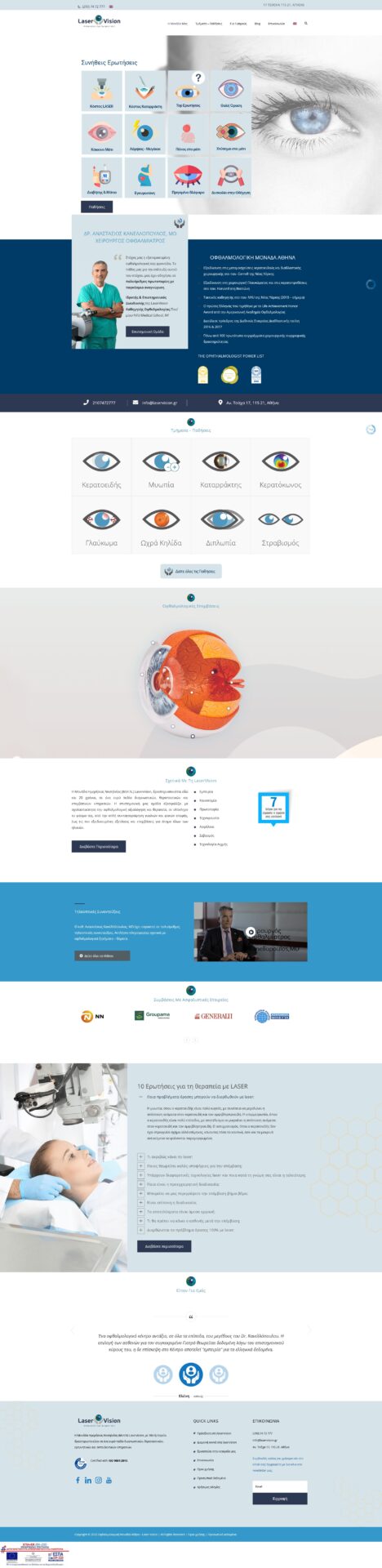
A deep navy blue palette — clean, clinical, and internationally legible — grounds the design in medical credibility. Soft gradients into lighter blues and whites provide warmth and openness, avoiding the sterile harshness of an all-white clinical aesthetic. Typography is precise and legible: a strong display sans-serif for headings that conveys expertise, with highly readable body type for the dense medical content covering diagnostic equipment, surgical procedures, conditions, and research output.
The founder’s portrait — a confident, direct image of Prof. Kanellopoulos — is given prominent placement on the homepage with his institutional affiliations (NYU Medical School, Harvard, Cornell) clearly surfaced. In medical web design, the physician’s credibility is the site’s most powerful conversion asset, and the layout was structured to deliver this before any service listing. The official LaserVision logo was updated in 2024 to a refined version that maintains the established brand equity while sharpening its contemporary feel.
Design approach
The site serves three distinct audiences simultaneously: patients seeking diagnosis or treatment (from routine myopia correction to complex keratoconus surgery), referring physicians and medical professionals (accessing scientific textbooks, presentations, and the Athens Protocol documentation), and international medical peers and trainees (the institute trains surgeons from the US and globally). Each audience group was given dedicated navigation pathways — the “For Medical Professionals” section exists alongside the patient-facing Conditions & Treatments structure — ensuring that a visiting ophthalmologist and a patient researching cataract surgery are never competing for the same entry point.
The Conditions & Treatments section covers twelve distinct eye conditions — Nearsightedness, Farsightedness, Astigmatism, Cornea and Corneal Transplantation, Keratoconus, Cataracts, Glaucoma, Presbyopia, Amblyopia, Strabismus, Pterygium, Dry Eye, and more — each with dedicated pages written to serve a patient who has just received a diagnosis and needs accurate, accessible information from a source they can trust. Medical accuracy and plain-language accessibility were held in balance throughout.
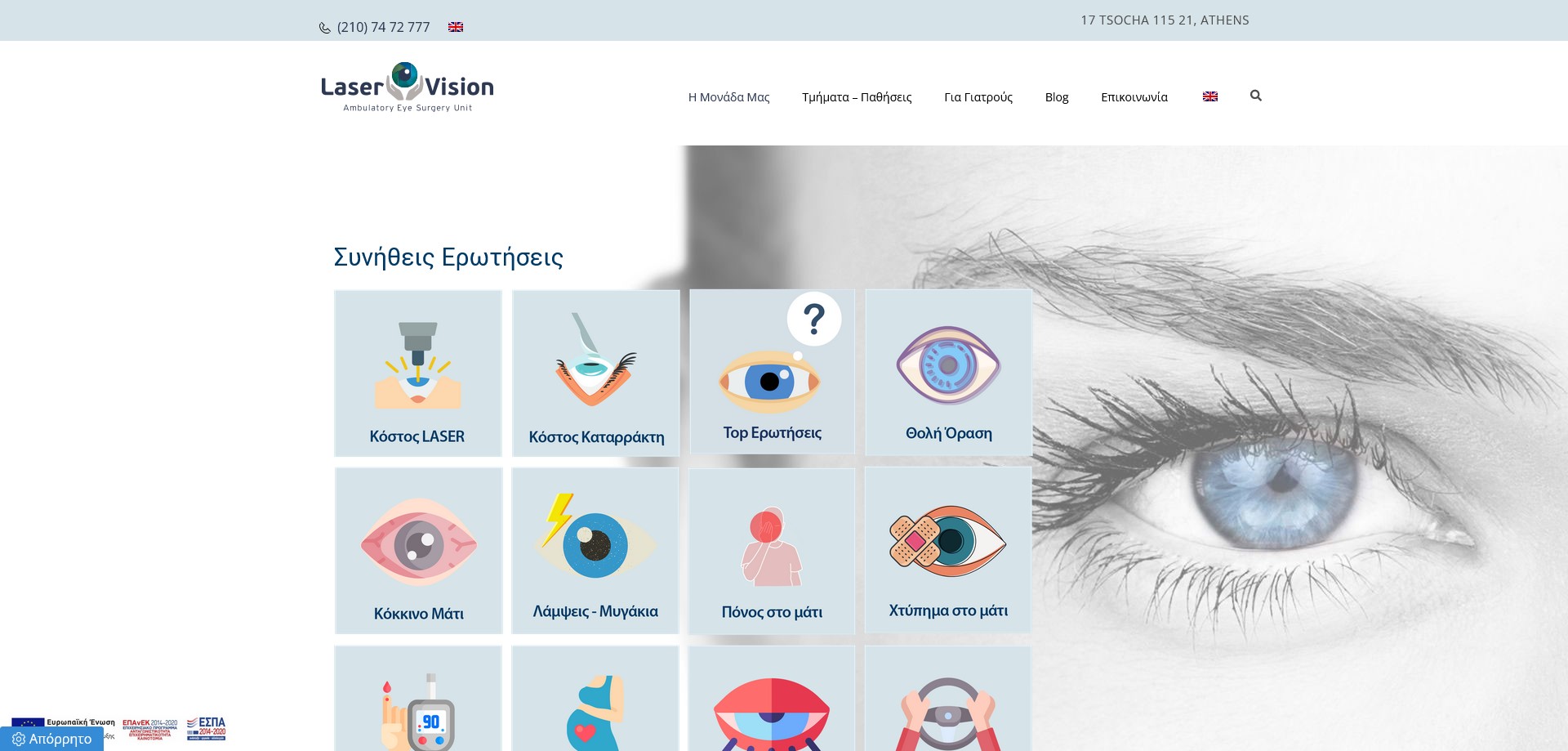
A quick-access FAQ section on the homepage uses visual symptom icons — pregnancy and eye health, laser eye surgery questions, red eye, cataracts, difficulty reading, diabetes and vision, and others — allowing a patient arriving with a specific concern to self-navigate immediately without reading through service menus. This symptom-first UX approach is a deliberate design choice that reduces the cognitive burden on anxious patients.
Technical build
The site was built on WordPress with a fully custom theme, using WPML (the WordPress Multilingual Plugin) to deliver a complete bilingual experience in Greek and English — critical for an institute with a significant international patient and medical peer audience. Both language versions are maintained to full depth across all condition pages, treatment descriptions, team profiles, and research content, ensuring international visitors receive the same quality of information as Greek-speaking patients.